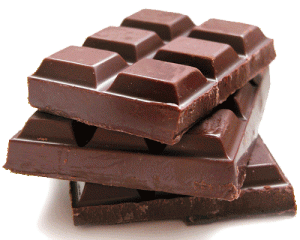
 I was flipping through a magazine the other day and came to an abrupt halt when I saw an article about hosting a Chocolate Tasting Party.
Hold. The. Phone.
You can do that? You can invite people over with the only intent (besides connecting and having fun) being to eat chocolate. I want to have one of these parties!
Can you become a certified master taster? How much chocolate eating does that require? Sign me up!
I thought I’d share some of the basic info on how to host a Chocolate Tasting Party. In return for the information, please invite me to your chocolate tasting party. I’d love to come.
Know Your Terminology
Cacao – used by the The U.S. Food and Drug Administration to refer to the bean, which is the source of the cacao components such as chocolate liquor, cocoa butter, and cocoa powder.
Chocolate liquor – produced by grinding the cacao bean nib to a smooth, liquid state. In the U.S., chocolate liquor can also be called chocolate, unsweetened chocolate, baking chocolate, or bitter chocolate.
Cocoa butter – represents the fat naturally found in beans. The amount of cocoa butter in cacao beans typically ranges from 50 to 60%, with the balance being non-fat cocoa solids.
Cocoa or cocoa powder – the product made by removing part of the fat from the cocoa bean and and grinding into a powder.
Milk Chocolate – A combination of chocolate liquor, cocoa butter, sugar and milk or cream. Milk chocolate must contain at least 10% chocolate liquor and at least 12% total milk ingredients.
Sweet Chocolate – A combination of chocolate liquor, cocoa butter and sugar, and contains at least 15% chocolate liquor.
Semisweet or Bittersweet Chocolate – A combination of chocolate liquor, cocoa butter and sugar, but contains at least 35% chocolate liquor. Bittersweet chocolate and semisweet chocolate are often called dark chocolate.
Unsweetened Chocolate or Baking Chocolate – This is straight chocolate liquor formed into a bar with no added sugar.
White Chocolate – Made from the same ingredients as milk chocolate but without the nonfat cocoa solids. White chocolate must contain at least 20% cocoa butter and 14% total milk ingredients.
Choose your Chocolate
Like wine, chocolate may be chosen based on type, region, blend and ingredients. Try centering your tasting around a theme such as:
Scaled Percent of Cacao: Try a range of chocolates from low like 35% cacao to high, around 80%. You’ll taste from all the different types of chocolate from milk to extra dark.
Same Percent Cacao: Find different chocolates all at the same percentage. You could taste all chocolates that are 70% cacao, for example.
One Type of Chocolate: Try a selection of only dark chocolates, or only milk chocolates.
Place of Origin: Sample chocolates from different regions. Observe the variations between chocolates from Central and South America countries versus European blends.
Preparing for the Tasting
You will want to keep your tasting to a maximum of six different chocolates. More than that and your palate loses it’s ability to discern flavor variations.
Keep chocolate at room temperature.
Each sample should be small, no more than 1/4 inch square.
Create a plate for each sampling. Include a place card with the name of the chocolate or the original chocolate label for reference. Make sure you provide a place for guests to take notes. You could create a tasting mat that lists the chocolates, pertinent info about each one and has a place to jot notes.
Go from light to dark. By doing this, your taste buds are set up for a more complex, intense tasting.
Cleanse the palate. Make sure you have room temperature water available for tasters to cleanse their palate between bites. Unsalted crackers or plain white bread will also work.
You may want to provide a light meal before you begin the tasting, making sure to leave enough time between eating and tasting for the palate to be clear and ready for the chocolate.
The Tasting
Engage all your senses and have fun with it. Use these five steps as a guideline:
1. Sight – look at the chocolate’s color. Is it silky, even textured? Does it have a high shine ( a sign of quality chocolate).
2. Touch – Is the surface smooth. Premium chocolate should never be gray or grainy.
3. Sound – When the bar breaks, it should offer a crisp, loud snap.
4. Scent – Breathe in the fragrance. Does it smell rich? Are the aromas intense? Are there added nuances like vanilla, citrus?
5. Taste – Allow it to melt on your tongue and savor the flavors and richness.
Enjoy your chocolate tasting. And remember if you need an extra taster, I’m always available!
Happy Entertaining!
The chocoholic
Read Full Post »




 Savvy Entertaining